Motifs Across Cultures
Type myth told inside a philosophical dialogue (no tale-type number cited)
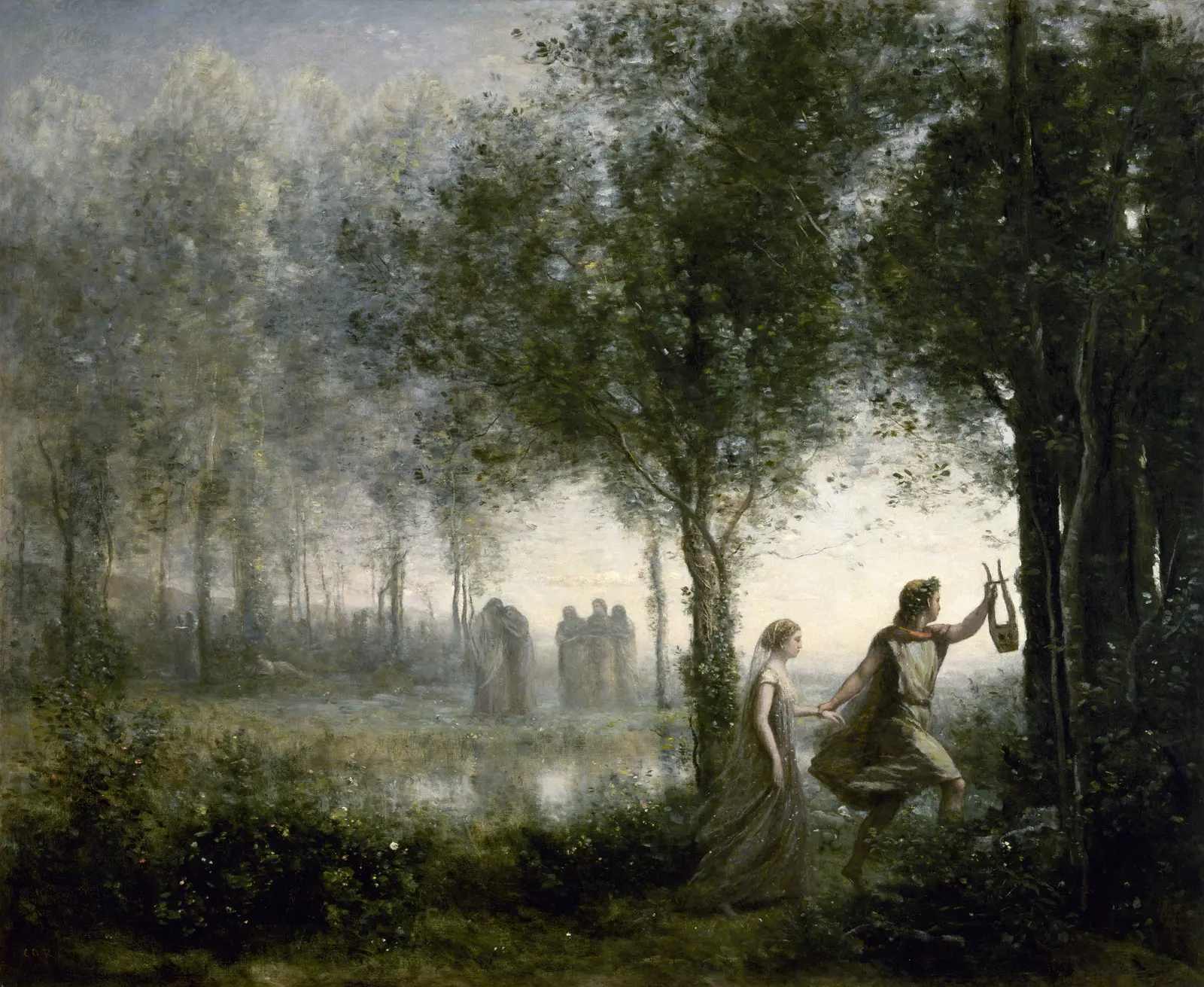
In Plato’s Symposium, the speaker Phaedrus says the gods showed Orpheus only a phantom: no rule, no look back. Five ancient tellings, compared motif by motif.
Picture credit
"Orpheus Leading Eurydice from the Underworld" by Camille Corot — https://commons.wikimedia.org/wiki/File:Jean-Baptiste-Camille_Corot_-_Orpheus_Leading_Eurydice_from_the_Underworld_-_Google_Art_Project.jpg — Public domain in US (exhibited at the Salon of 1861; Corot d. 1875); DE/FR (Jean-Baptiste-Camille Corot d. 1875, life+70); faithful photograph of a two-dimensional painting (PD-Art; Google Arts & Culture photograph)
Motifs Across Cultures
Type Akan folktale, one of the Anansesem or Spider-stories (no ATU number cited)
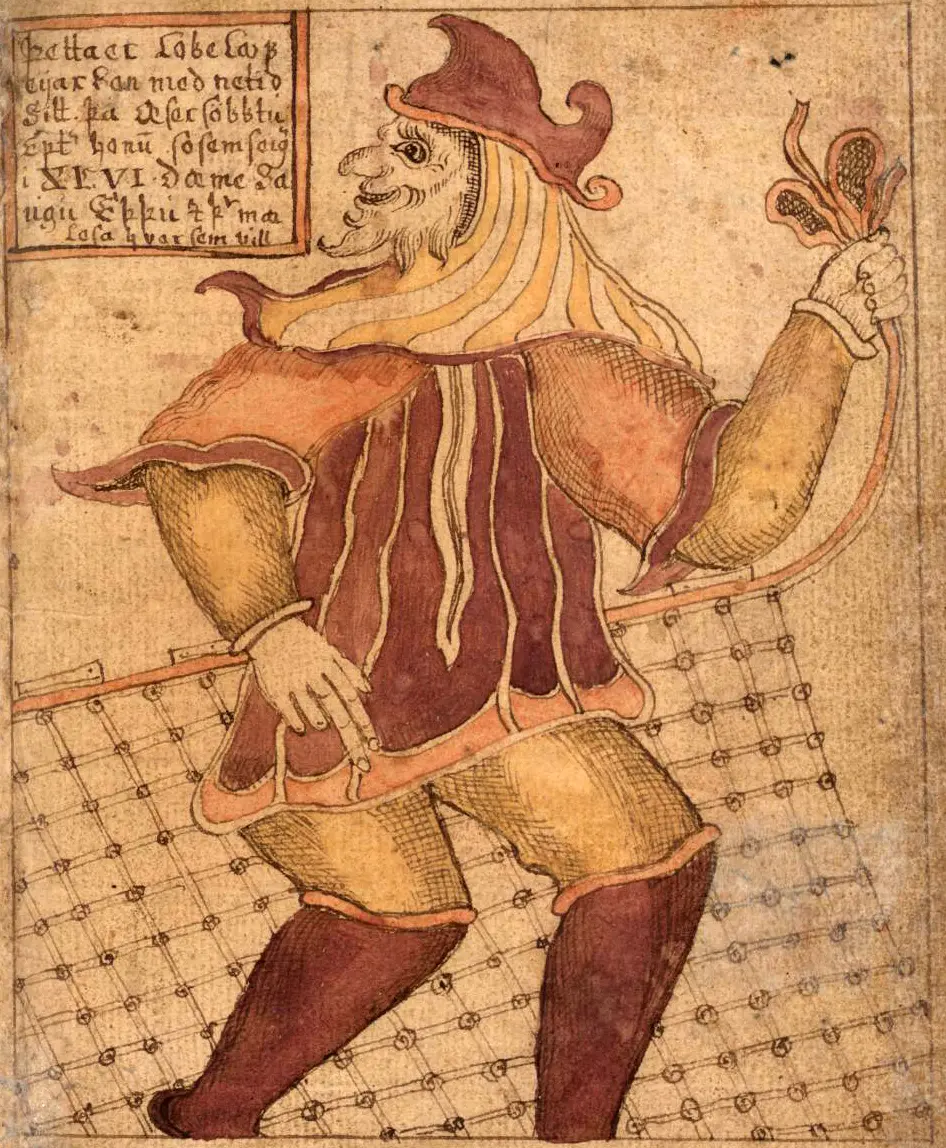
In an Akan tale printed by R. S. Rattray in 1930, Anansi buys the Sky-god’s stories. Beside Hermes, Loki and Coyote, five texts share one motif in eight.
Picture credit
"SÁM 66, 79r, Loki" by Jakob Sigurðsson — https://commons.wikimedia.org/wiki/File:S%C3%81M_66,_79r,_Loki.jpg — Public domain in US (manuscript of 1765–66); DE/FR (Jakob Sigurðsson, 18th-century draughtsman, life+70); faithful reproduction of a two-dimensional manuscript page (PD-Art), digitized for the Árni Magnússon Institute’s Sagnanet; cropped, rotated and levelled by the Commons uploader
Motifs Across Cultures
Type ATU 425B, as classified by D. L. Ashliman
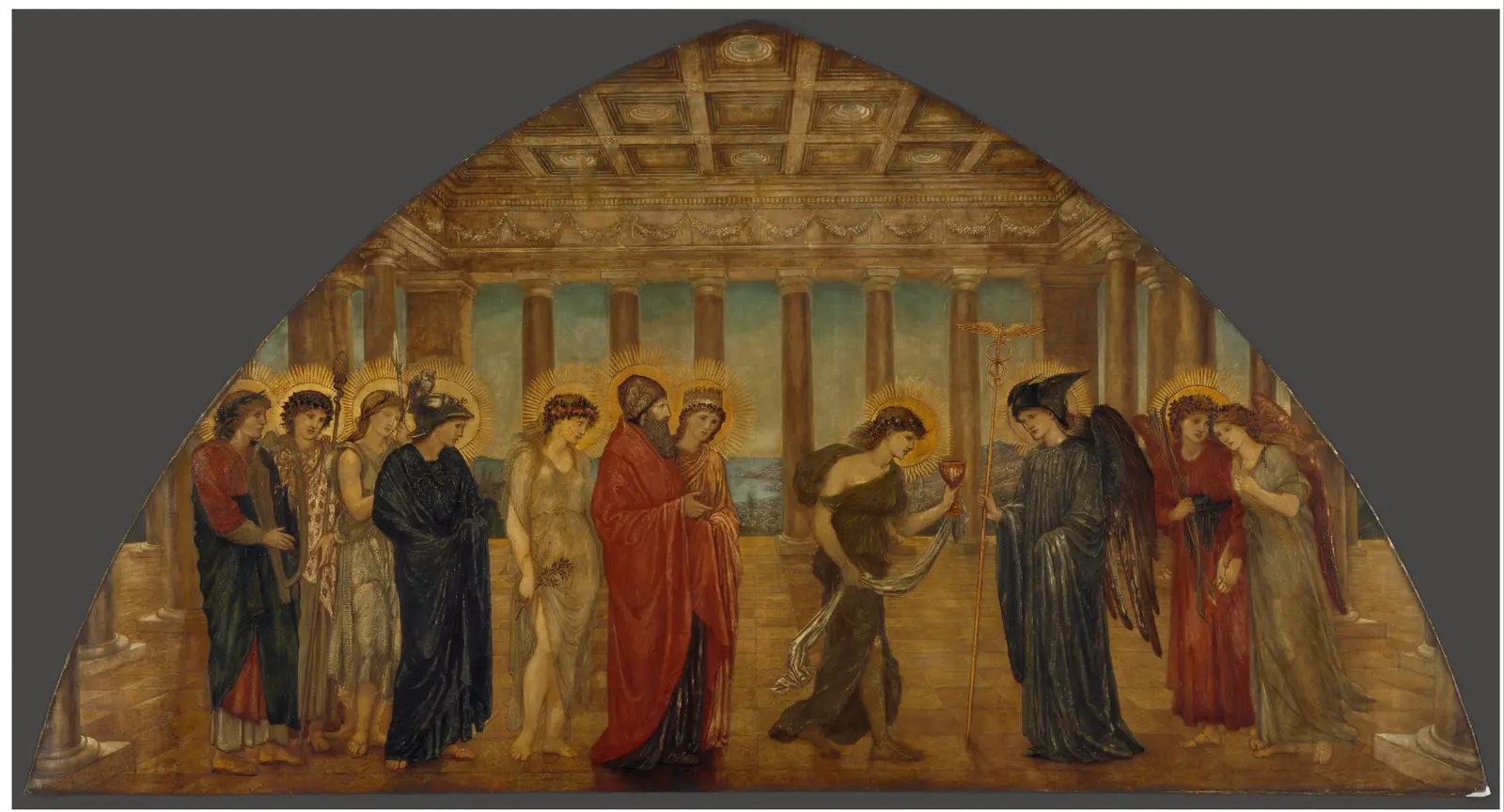
In Apuleius’s Metamorphoses, Cupid and Psyche is told by an old woman in a robbers’ cave to a captive bride. Later tellers kept her, cut her or replaced her.
Picture credit
"Cupid and Psyche - Palace Green Murals - Psyche entering the Portals of Olympus" by Edward Burne-Jones — https://commons.wikimedia.org/wiki/File:Edward_Burne-Jones_-_Cupid_and_Psyche_-_Palace_Green_Murals_-_Psyche_entering_the_Portals_of_Olympus_-_Google_Art_Project.jpg — Public domain in US (painted 1872–1881, Burne-Jones d. 1898; Commons marks it published before 1931); DE/FR (Edward Burne-Jones d. 1898, life+70); faithful photograph of a two-dimensional painting (PD-Art; Google Arts & Culture photograph)
Motifs Across Cultures
Type Greek myth told in two didactic poems (no ATU number cited)
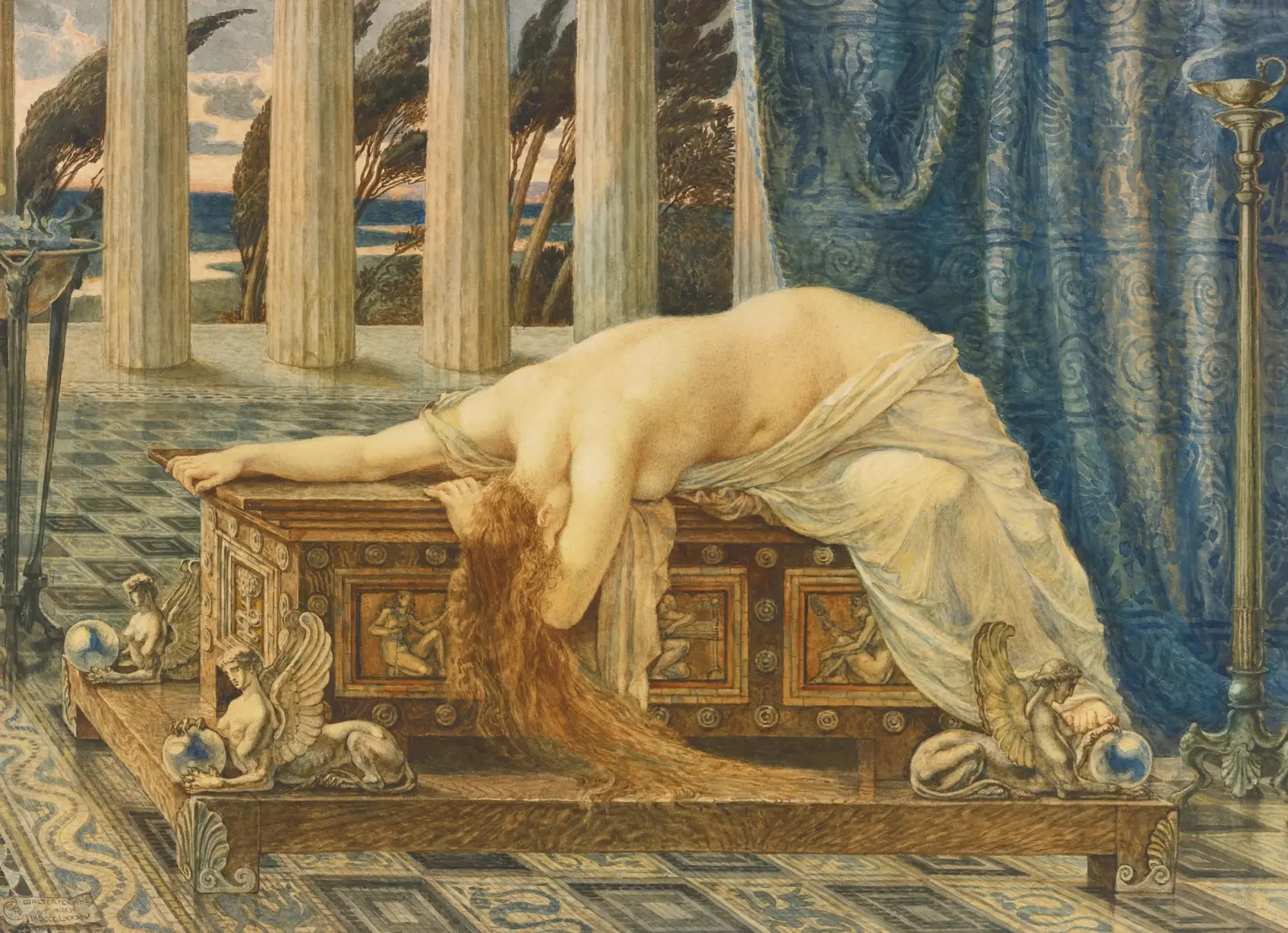
The Theogony’s woman has no jar and no name. Of the two Hesiodic poems, only Works and Days gives Pandora a jar; the box, by the Panofskys’ account, came later.
Picture credit
"Pandora" by Walter Crane — https://commons.wikimedia.org/wiki/File:Walter_Crane_-_Pandora_(1885).jpg — Public domain in US (painted 1885; Walter Crane d. 1915, so the work is public domain whether it counts as published before 1930 or as unpublished); DE/FR (Walter Crane d. 1915, life+70); faithful photograph of a two-dimensional watercolour (PD-Art; Sotheby’s sale photograph, New York, 20 April 2015, lot 165)