Where folktales, myths and detective stories came from: each version traced to the named people who told it, wrote it down, edited it and printed it, with public-domain texts set side by side. A reference for adult readers and writers, not a children's storybook site.
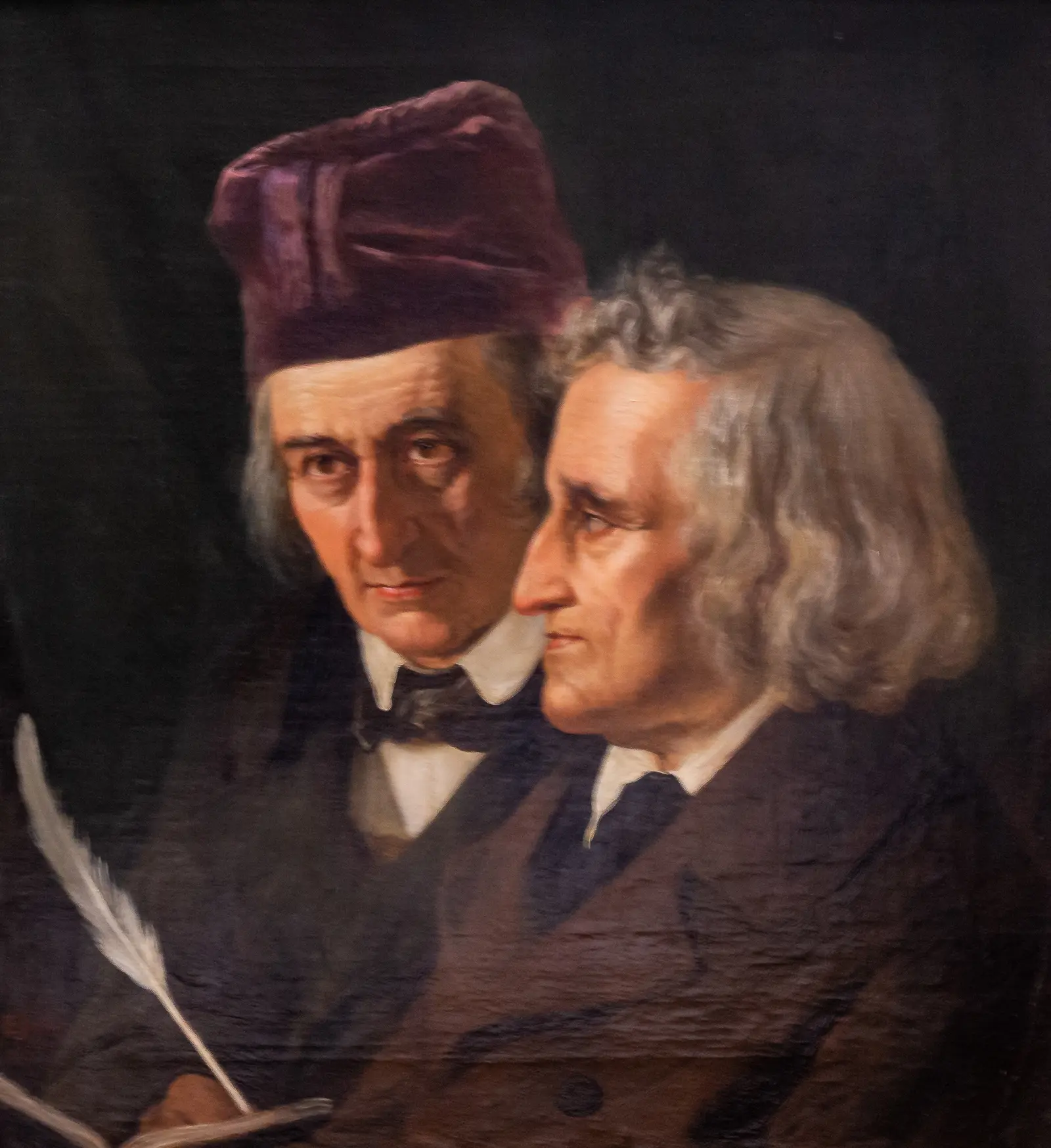
Bolte and Polívka’s 1913 notes on Grimm tales 1–60 name 21 tellers, 13 of them women, and 34 of 62 credits name Kassel. The register lists them entry by entry.
Teller 21 named in Bolte and Polívka’s notes on nos. 1–60, 13 of them women; see the register
Picture credit
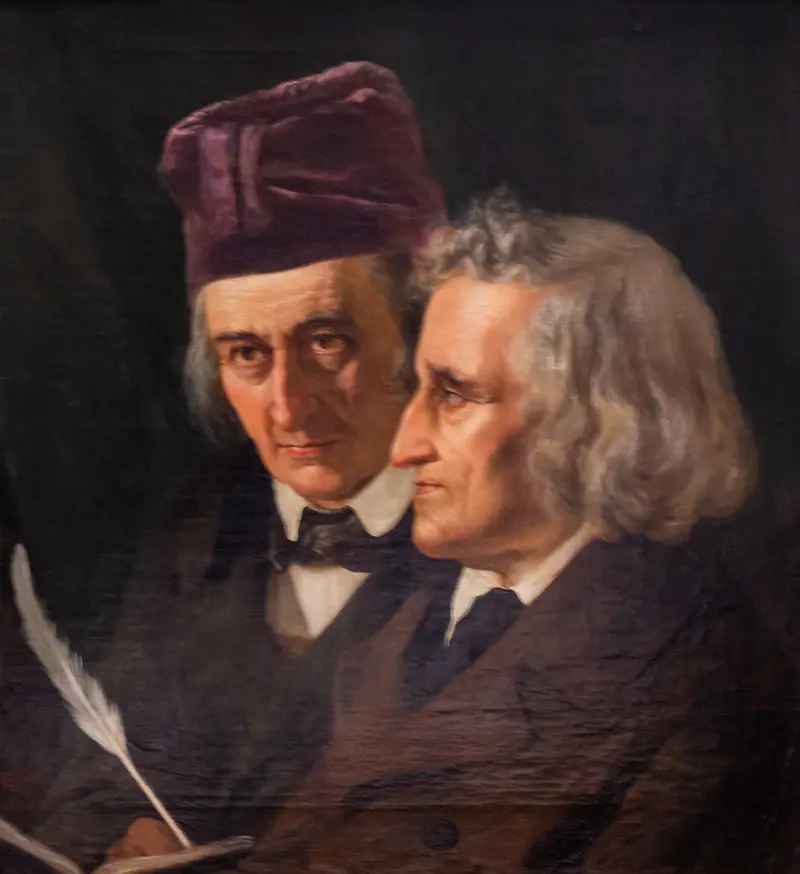
"Doppelportrait der Brüder Jacob und Wilhelm Grimm" by Elisabeth Jerichau-Baumann — https://commons.wikimedia.org/wiki/File:Alte_Nationalgalerie-Jerichau-Baumann-Gebr%C3%BCder_Grimm_DSC8174.jpg — CC0 1.0 (https://creativecommons.org/publicdomain/zero/1.0/); modified: cropped to the painted canvas; gilt frame and wall removed
Tellers and collectors
Profiles of the people behind particular versions: who told the tale, to whom, and who wrote it down.
the Zwehrn teller (the 1815 preface names her Viehmännin)
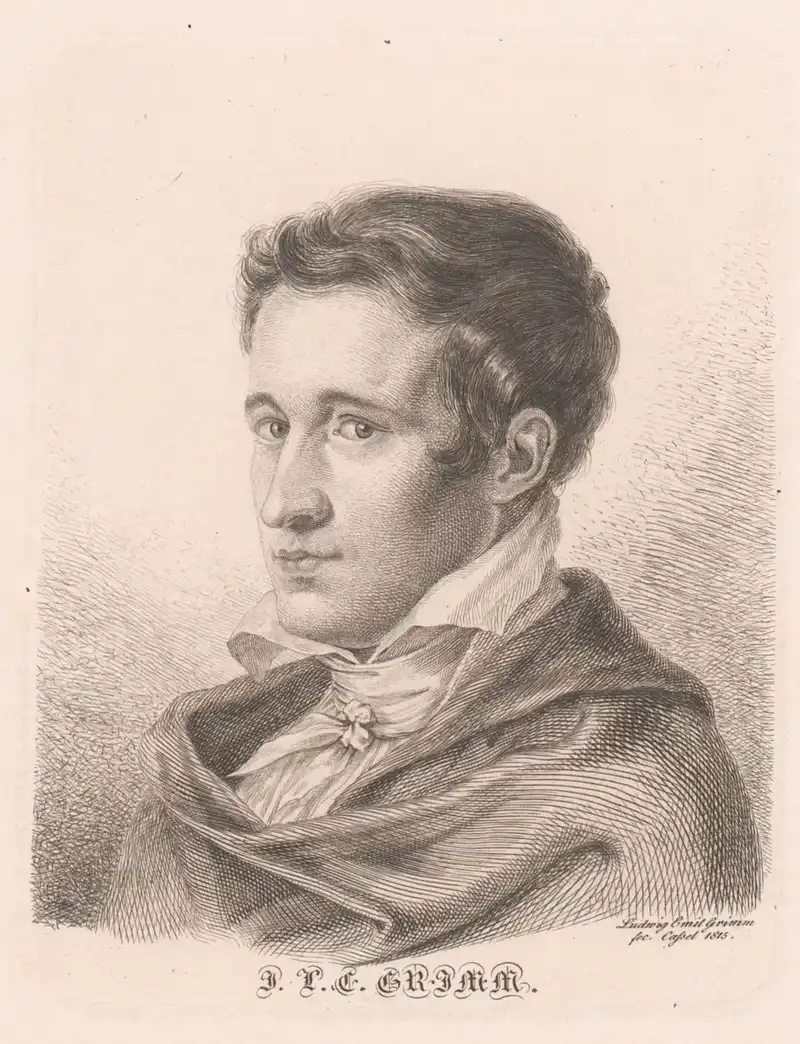
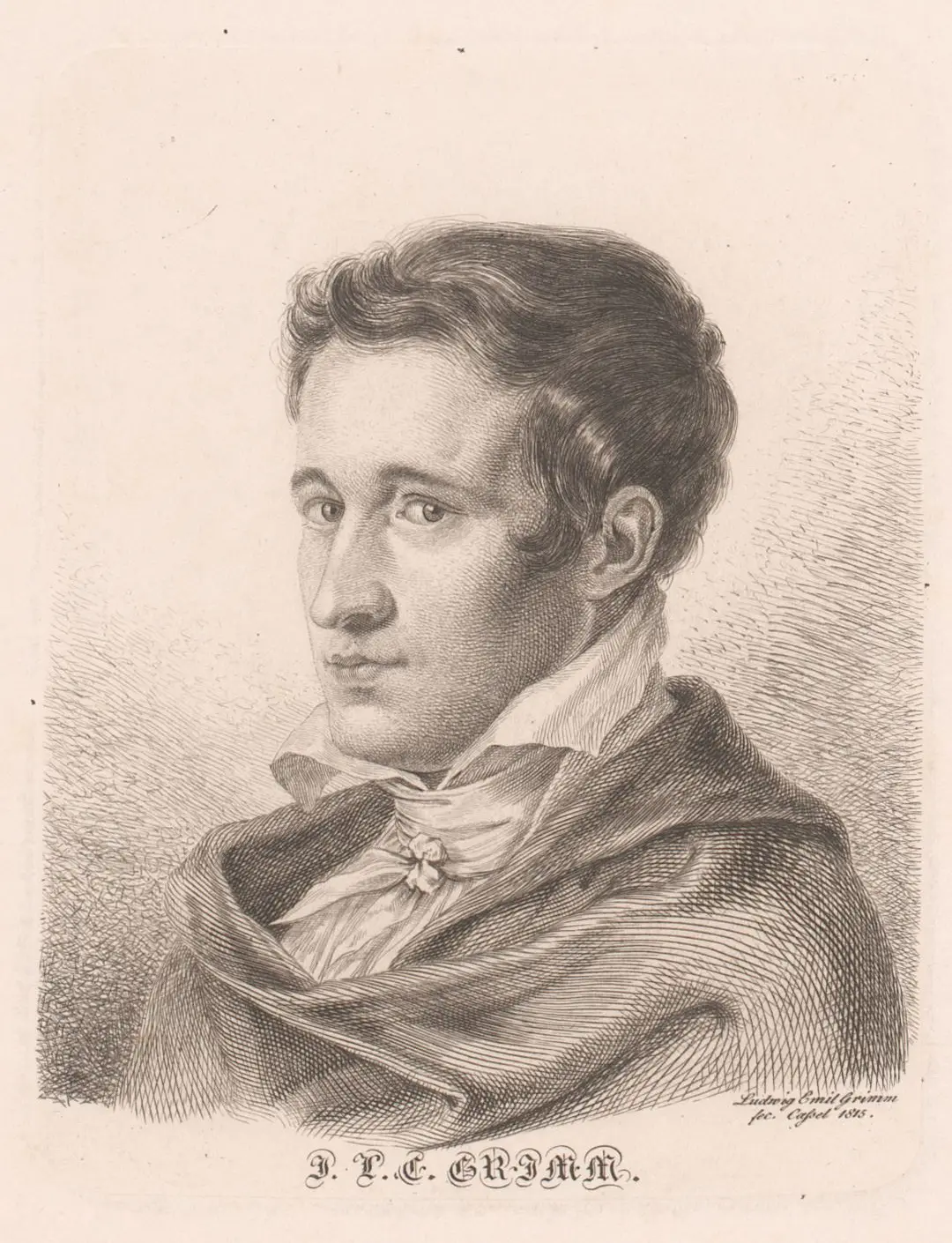
The Grimms’ 1815 preface calls Dorothea Viehmann a peasant woman. Her biography records an innkeeper’s daughter who married a tailor. Both prefaces, compared.
Picture credit
"Portret van Jacob Ludwig Karl Grimm" by Ludwig Emil Grimm — https://commons.wikimedia.org/wiki/File:Portret_van_Jacob_Ludwig_Karl_Grimm,_RP-P-1907-1042.jpg — CC0 1.0 (https://creativecommons.org/publicdomain/zero/1.0/); modified: cropped to the plate (sheet margins removed)
Hanna, called Diab in Galland’s diary (Hanna Diyab), a Maronite from Aleppo
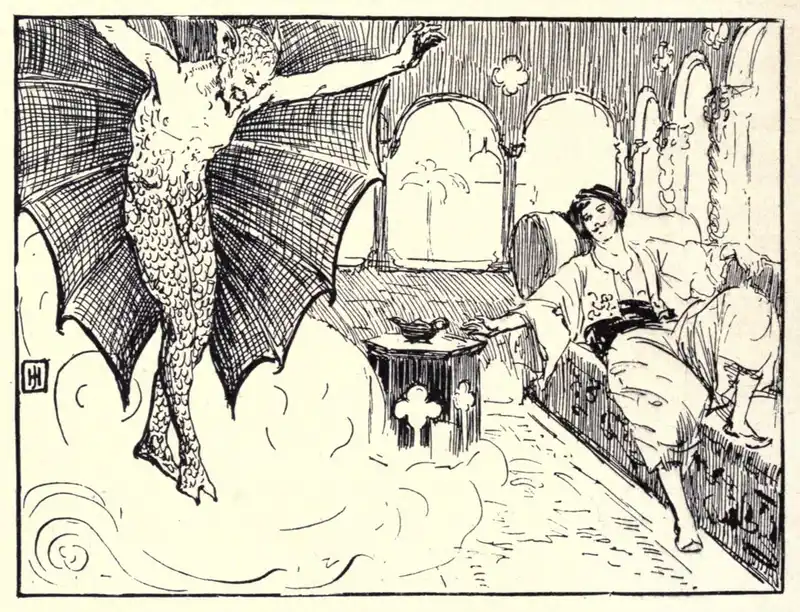
In the sources checked here, Aladdin’s earliest known record is Galland’s diary for 5 May 1709: Hanna, a Maronite from Aleppo, had just told him the tale.
Picture credit
"The Blue Fairy Book (1889), p. 78: plate to “Aladdin and the Wonderful Lamp”" by H. J. Ford — https://commons.wikimedia.org/wiki/File:The_Blue_Fairy_Book-0112.jpg — Public domain in US (published London and New York 1889); DE/FR (Henry Justice Ford d. 1941, life+70, public domain from 1 January 2012); modified: Cropped to the plate and its ruled frame with a strip of paper around it; the page text above and below is left out
unrecorded for most tales; the prefaces name printed sources and collectors, not tellers
Andrew Lang wrote in 1910 that his fairy books were “almost wholly the work of Mrs. Lang.” His 12 prefaces name her in 11, not in the Blue Fairy Book of 1889.
Picture credit
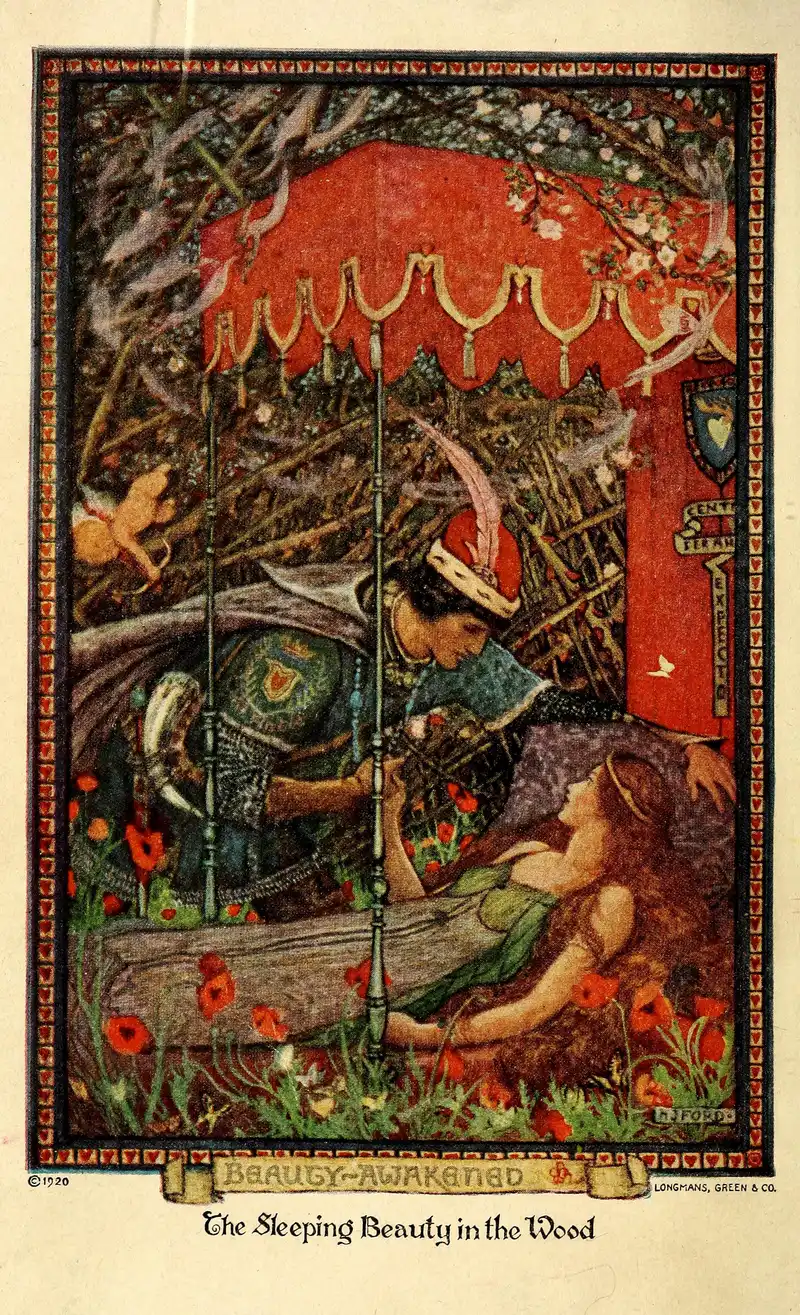
"Beauty Awakened (The Sleeping Beauty in the Wood), colour plate, The Blue Fairy Book, 1920 edition" by H. J. Ford — https://commons.wikimedia.org/wiki/File:Beauty_Awakened_(The_Sleeping_Beauty_in_the_Wood)_(HJ_Ford).jpg — Public domain in US (published New York 1920); DE/FR (Henry Justice Ford d. 1941, life+70, public domain from 1 January 2012)
The Grimms’ 1815 preface calls Dorothea Viehmann a peasant woman. Her biography records an innkeeper’s daughter who married a tailor. Both prefaces, compared.
Picture credit
"Portret van Jacob Ludwig Karl Grimm" by Ludwig Emil Grimm — https://commons.wikimedia.org/wiki/File:Portret_van_Jacob_Ludwig_Karl_Grimm,_RP-P-1907-1042.jpg — CC0 1.0 (https://creativecommons.org/publicdomain/zero/1.0/); modified: cropped to the plate (sheet margins removed)
Type collection of folktales (no single ATU number)
Bolte and Polívka’s 1913 notes on Grimm tales 1–60 name 21 tellers, 13 of them women, and 34 of 62 credits name Kassel. The register lists them entry by entry.
Picture credit
"Doppelportrait der Brüder Jacob und Wilhelm Grimm" by Elisabeth Jerichau-Baumann — https://commons.wikimedia.org/wiki/File:Alte_Nationalgalerie-Jerichau-Baumann-Gebr%C3%BCder_Grimm_DSC8174.jpg — CC0 1.0 (https://creativecommons.org/publicdomain/zero/1.0/); modified: cropped to the painted canvas; gilt frame and wall removed
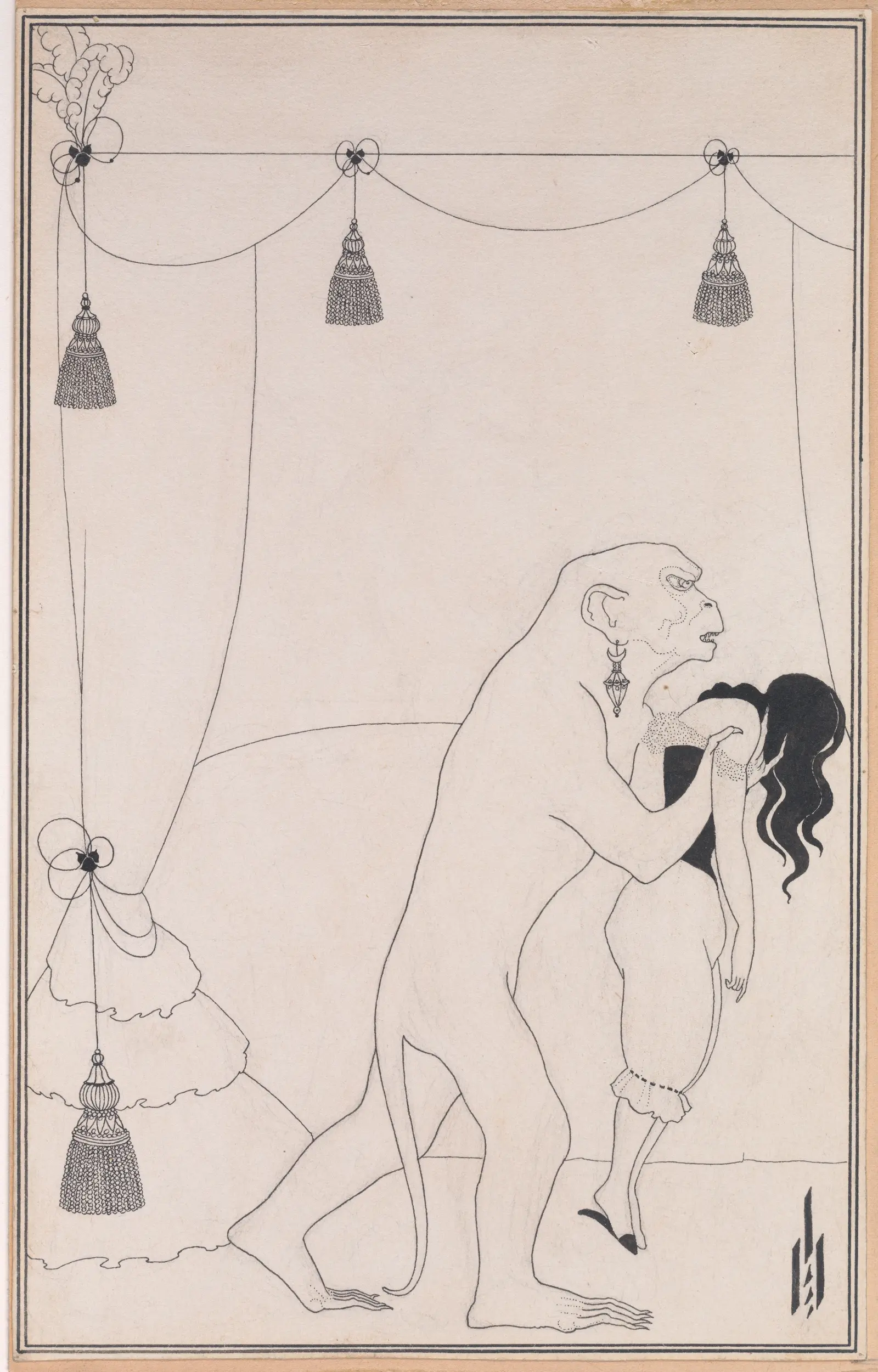
Poe’s narrator tells the Rue Morgue case once it is closed, yet gives its facts in the order he met them. Of 16 facts traced in the 1841 text, Dupin gives 12.
Picture credit
"The Murders in the Rue Morgue, for Edgar Allan Poe’s “Tales of Mystery and the Imagination,” Chicago, 1895-96" by Aubrey Beardsley — https://commons.wikimedia.org/wiki/File:The_Murders_in_the_Rue_Morgue,_for_Edgar_Allan_Poe%E2%80%99s_%E2%80%9CTales_of_Mystery_and_the_Imagination,%E2%80%9D_Chicago,_1895-96_MET_DP-21095-001.jpg — CC0 1.0 (https://creativecommons.org/publicdomain/zero/1.0/)
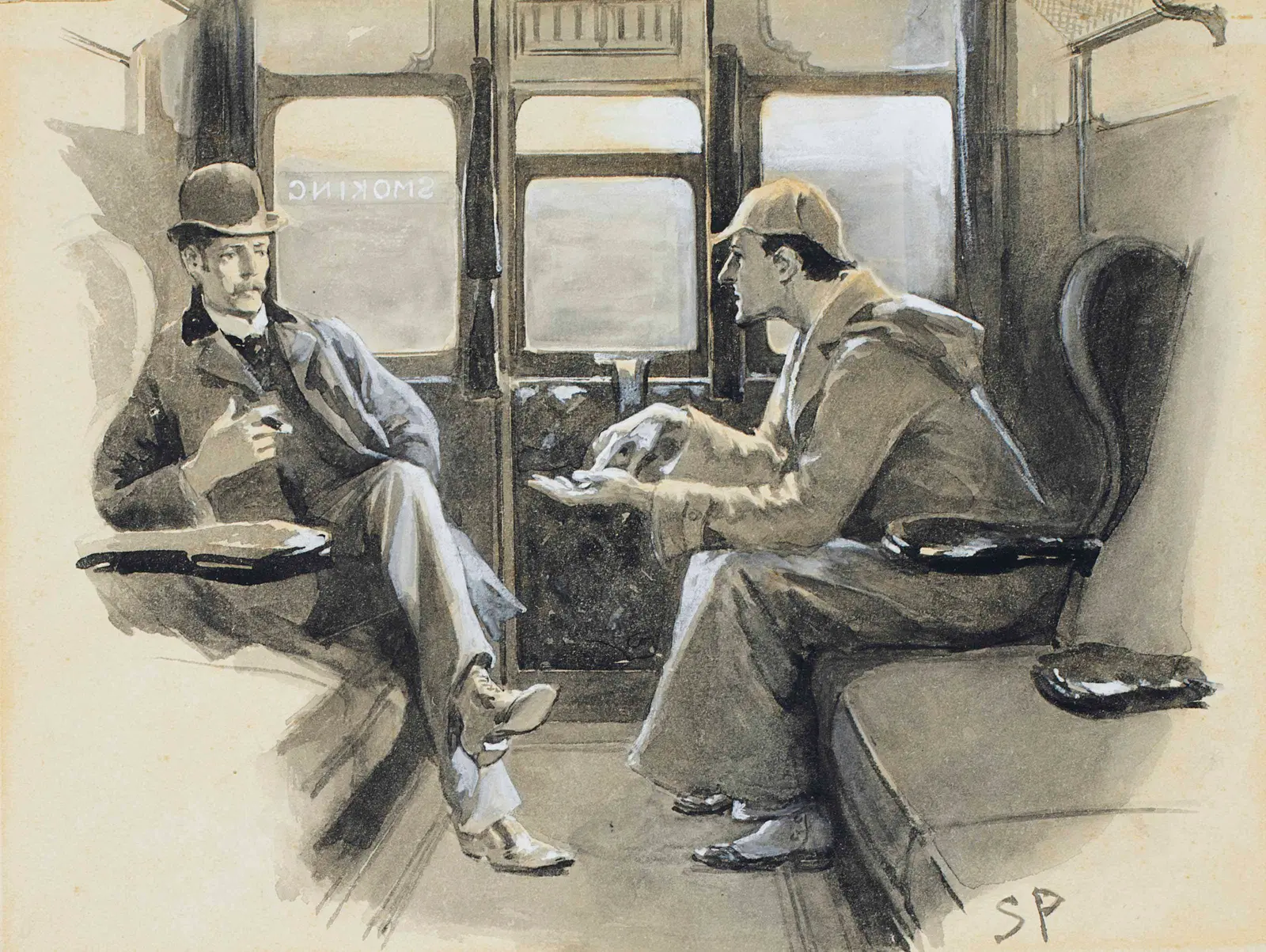
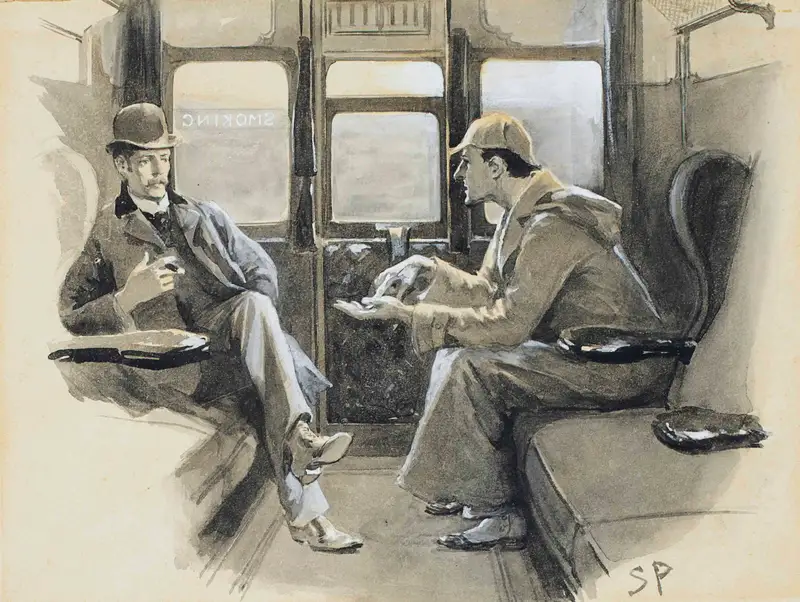
Dr. Watson narrates 56 of the 60 Sherlock Holmes stories, counted story by story. Holmes tells two, two are third-person, and Poe's friend did it in 1841.
Picture credit
"Original drawing for “Silver Blaze”" by Sidney Paget — https://commons.wikimedia.org/wiki/File:The_Adventure_of_Silver_Blaze_01.jpg — Public domain in US (published 1892 in The Strand Magazine); DE/FR (Sidney Paget d. 1908, life+70); faithful photograph of a two-dimensional drawing (PD-Art; auction-house photograph, Christie's)
Type myth told inside a philosophical dialogue (no tale-type number cited)
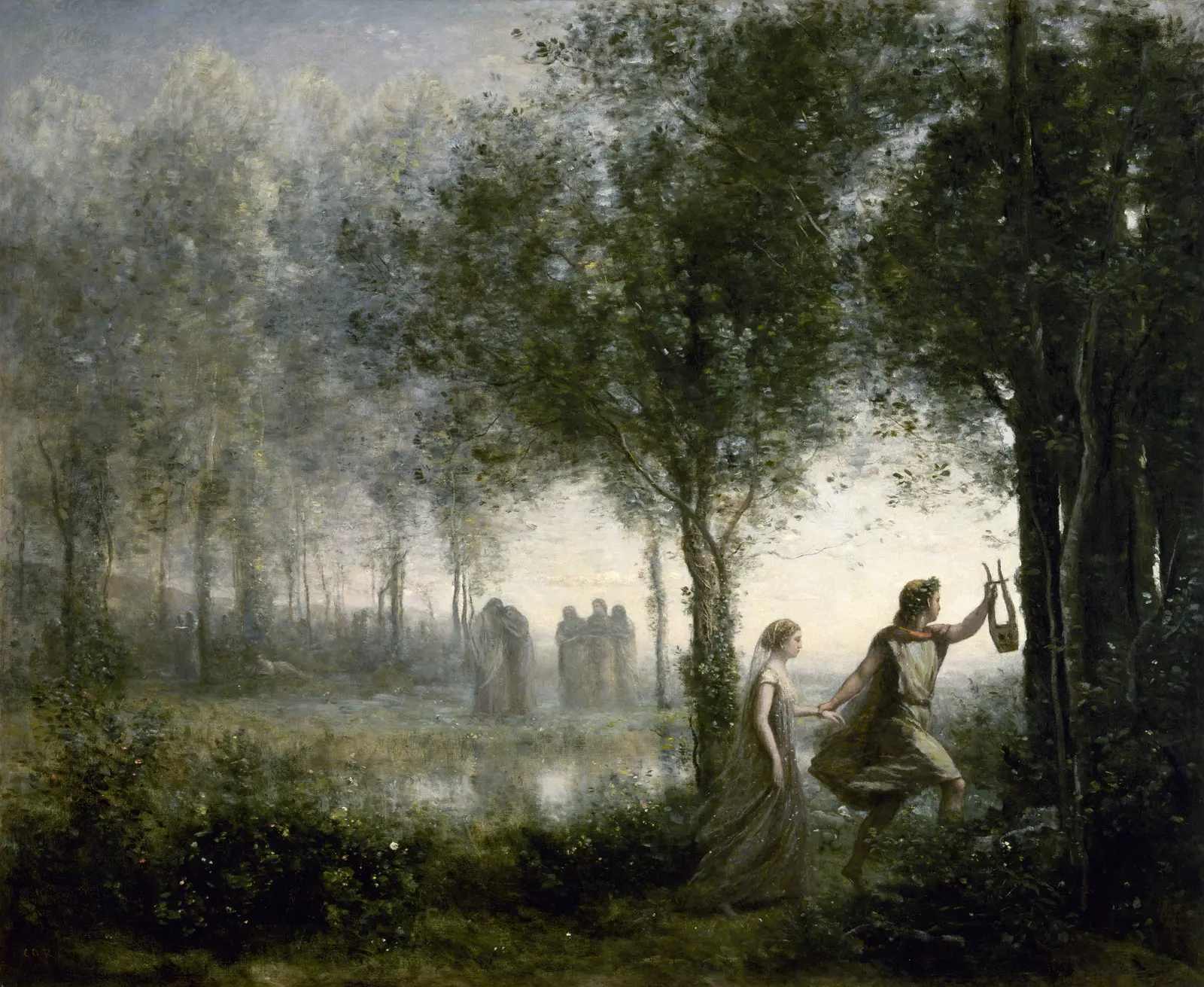
In Plato’s Symposium, the speaker Phaedrus says the gods showed Orpheus only a phantom: no rule, no look back. Five ancient tellings, compared motif by motif.
Picture credit
"Orpheus Leading Eurydice from the Underworld" by Camille Corot — https://commons.wikimedia.org/wiki/File:Jean-Baptiste-Camille_Corot_-_Orpheus_Leading_Eurydice_from_the_Underworld_-_Google_Art_Project.jpg — Public domain in US (exhibited at the Salon of 1861; Corot d. 1875); DE/FR (Jean-Baptiste-Camille Corot d. 1875, life+70); faithful photograph of a two-dimensional painting (PD-Art; Google Arts & Culture photograph)
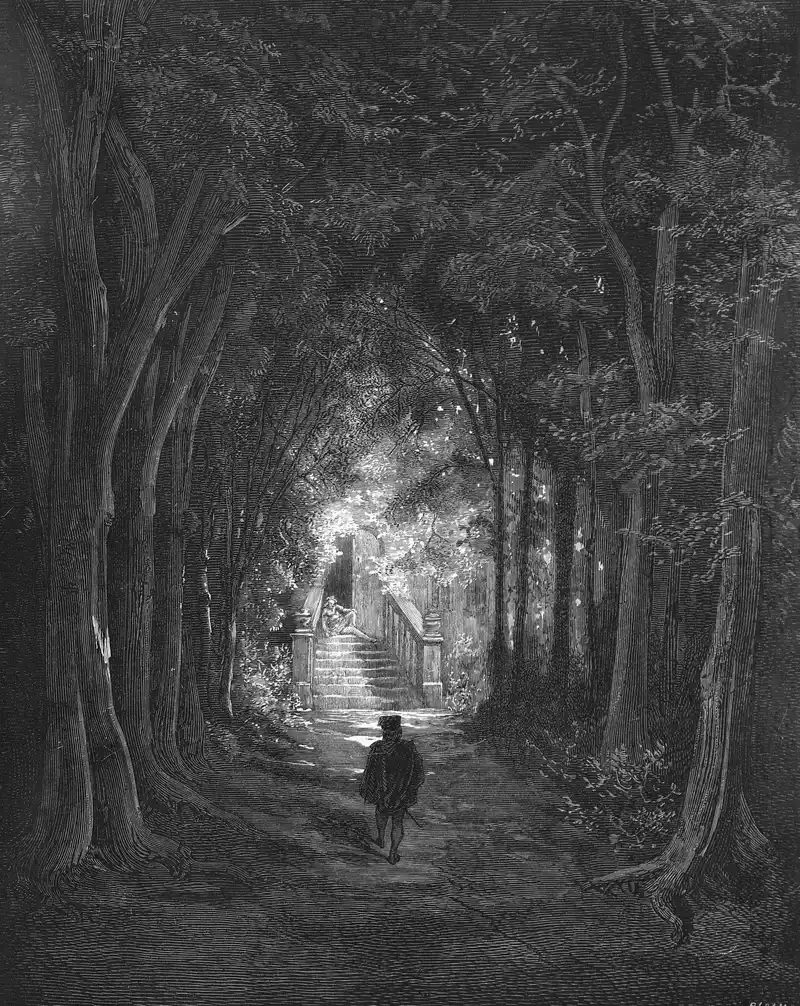
Sleeping Beauty in Basile (printed 1636): twins draw out a splinter. Perrault (1697): the spell ends. Of 4 texts compared here, only 2 Grimm texts use a kiss.
Picture credit
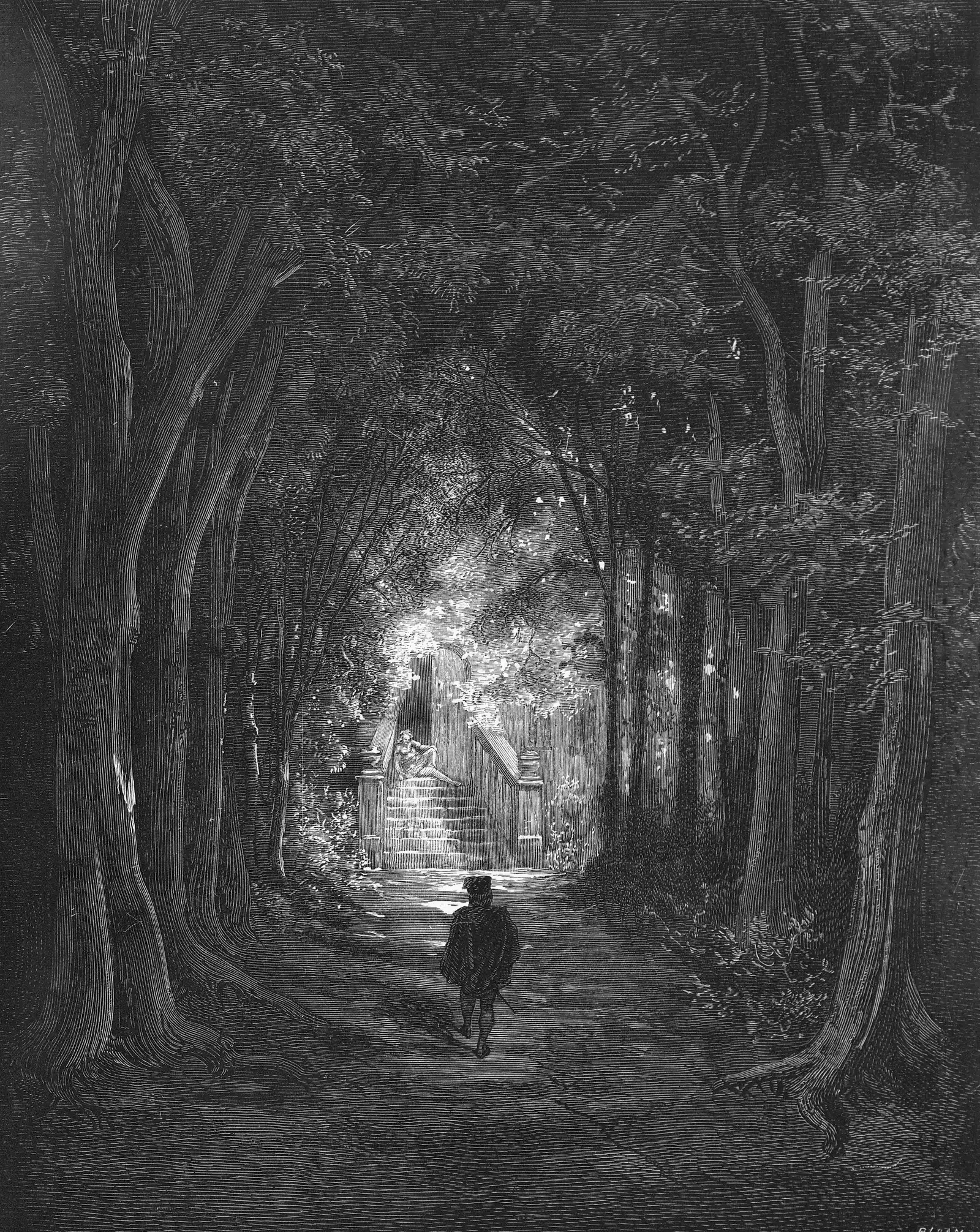
"La Belle au Bois Dormant" by Gustave Doré — https://commons.wikimedia.org/wiki/File:La_Belle_au_Bois_Dormant_(136548149).jpg — Public domain in US (published 1867); DE/FR (Gustave Doré d. 1883, life+70); the wood engraver’s signature at lower right is not legible, and an engraver working on an 1867 edition is presumed not to have lived past 1955 (log, image ruling 10)
Type frame story, a story that holds other stories (no tale-type number cited)
By Zotenberg’s 1888 account, the copyist of the manuscript Galland translated stopped in night 281, with Scheherazade still telling; her pardon is not in it.
Picture credit
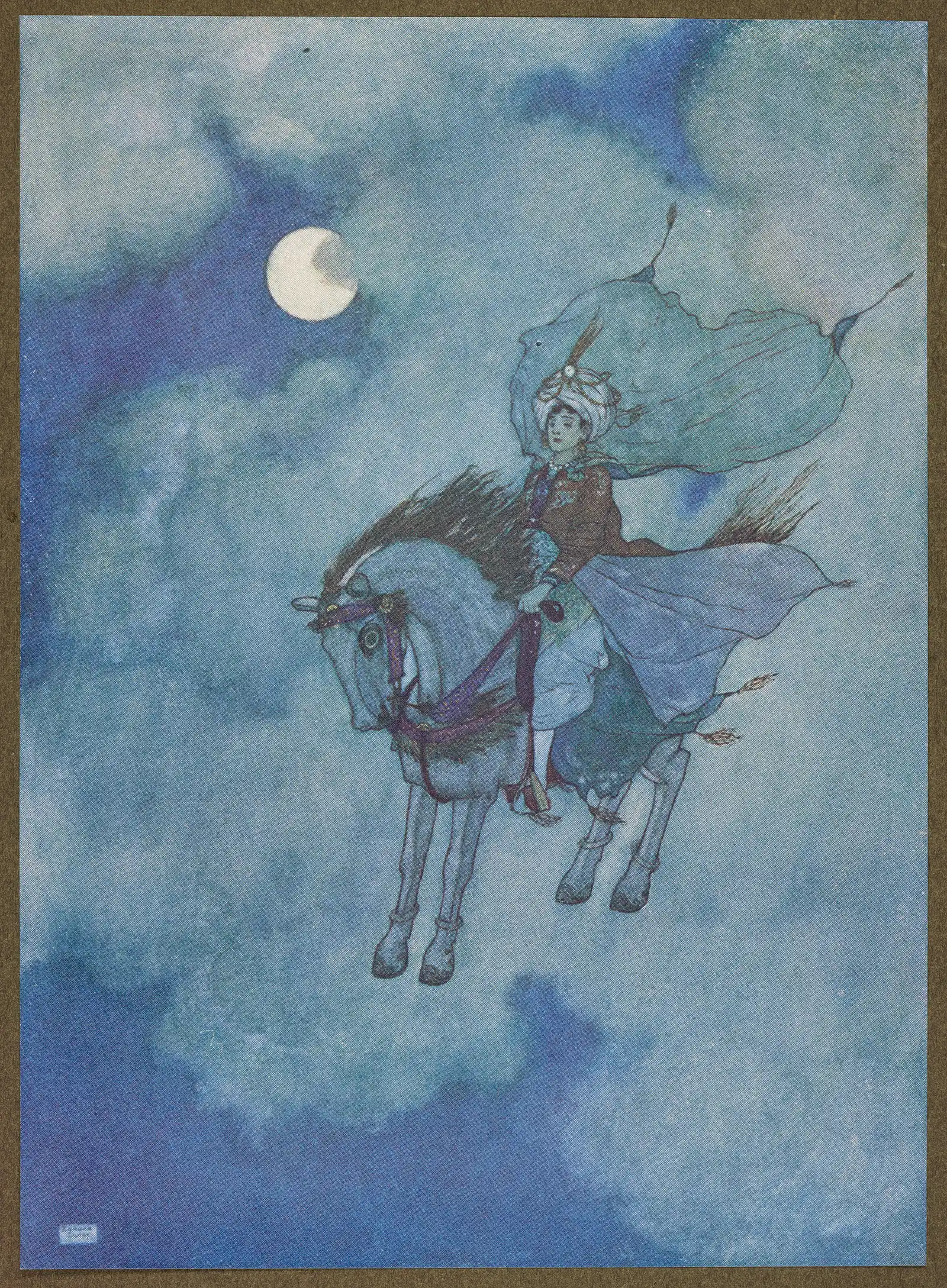
"Stories from the Arabian Nights (1907), colour plate of a rider on a flying horse" by Edmund Dulac — https://commons.wikimedia.org/wiki/File:'As_he_descended,_the_daylight_in_which_hitherto_he_had_been_travelling_faded_from_view.'_(18412346383).jpg — Public domain in US (published London 1907); DE/FR (Edmund Dulac d. 1953, life+70, public domain from 1 January 2024)
In the earliest known Arsène Lupin story (Je sais tout, July 1905), the passenger who tells it is Lupin; the 1907 book adds a friend’s frame around his voice.
Picture credit
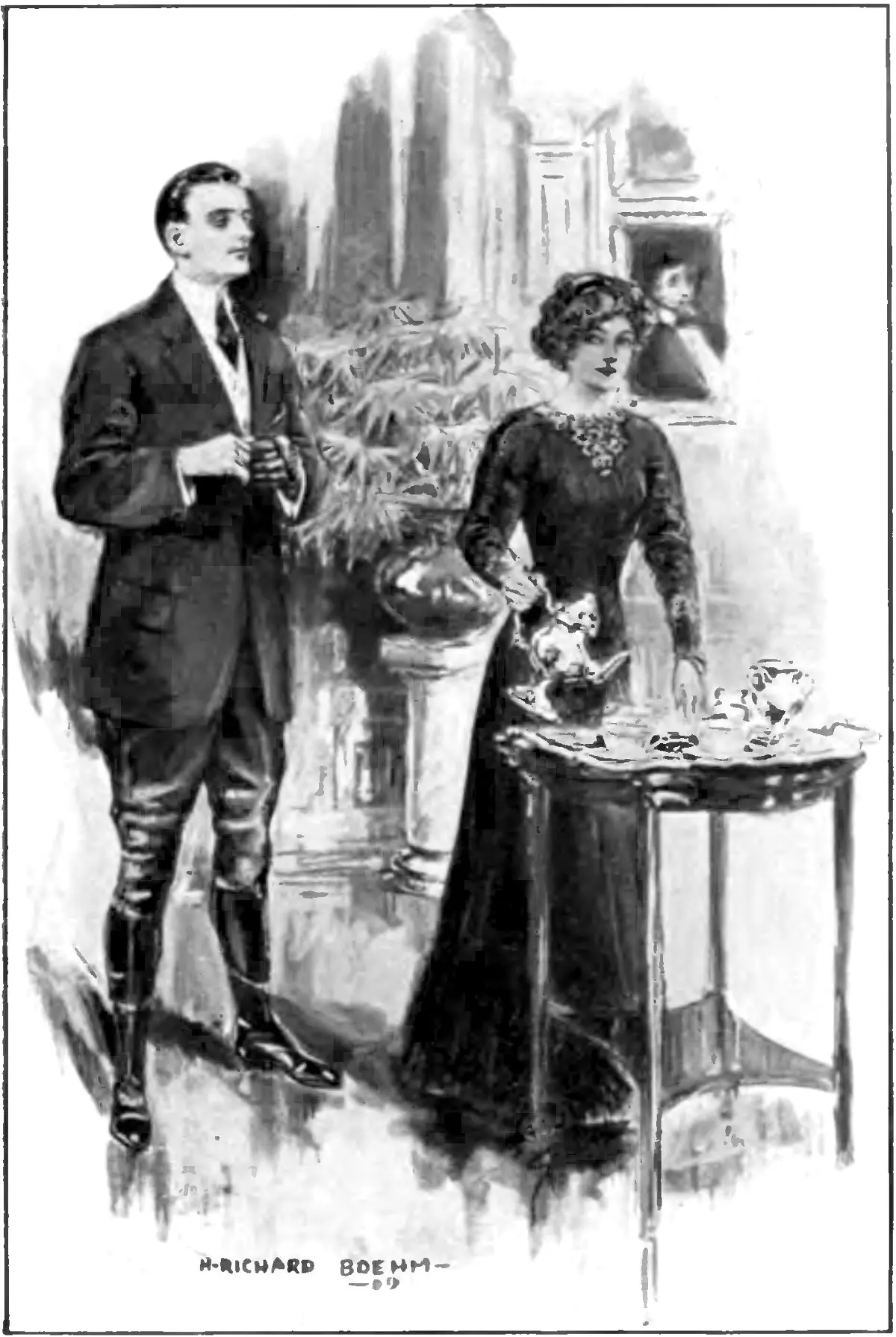
"Frontispiece, Arsène Lupin (Doubleday, 1909)" by H. Richard Boehm — https://commons.wikimedia.org/wiki/File:Frontispiece-Arsene_Lupin_(Doubleday,_1909).jpg — Public domain in US (published 1909); DE/FR (H. Richard Boehm d. 1914, life+70)
How public-domain stories are put together, read passage by passage: who narrates, who is listening, what the narrator knows, and when the reader is told.
Detective stories in English and French, checked against first printings and first editions: which author, which magazine, who in the story tells the case.
Myths and legends from different cultures, read in named editions and translations, with every shared motif counted in a grid and every difference listed too.
One tale type across named tellers and editions: who told it, who wrote it down, who edited and printed it, and what changed from one version to the next.
6 articles
Reference pages
Longer pages that gather every named teller, edition or narrator on one subject. Each one is updated as new articles add to it.
Bolte and Polívka’s 1913 notes on Grimm tales 1–60 name 21 tellers, 13 of them women, and 34 of 62 credits name Kassel. The register lists them entry by entry.
Picture credit
"Doppelportrait der Brüder Jacob und Wilhelm Grimm" by Elisabeth Jerichau-Baumann — https://commons.wikimedia.org/wiki/File:Alte_Nationalgalerie-Jerichau-Baumann-Gebr%C3%BCder_Grimm_DSC8174.jpg — CC0 1.0 (https://creativecommons.org/publicdomain/zero/1.0/); modified: cropped to the painted canvas; gilt frame and wall removed
Dr. Watson narrates 56 of the 60 Sherlock Holmes stories, counted story by story. Holmes tells two, two are third-person, and Poe's friend did it in 1841.
Picture credit
"Original drawing for “Silver Blaze”" by Sidney Paget — https://commons.wikimedia.org/wiki/File:The_Adventure_of_Silver_Blaze_01.jpg — Public domain in US (published 1892 in The Strand Magazine); DE/FR (Sidney Paget d. 1908, life+70); faithful photograph of a two-dimensional drawing (PD-Art; auction-house photograph, Christie's)
Sleeping Beauty in Basile (printed 1636): twins draw out a splinter. Perrault (1697): the spell ends. Of 4 texts compared here, only 2 Grimm texts use a kiss.
Picture credit
"La Belle au Bois Dormant" by Gustave Doré — https://commons.wikimedia.org/wiki/File:La_Belle_au_Bois_Dormant_(136548149).jpg — Public domain in US (published 1867); DE/FR (Gustave Doré d. 1883, life+70); the wood engraver’s signature at lower right is not legible, and an engraver working on an 1867 edition is presumed not to have lived past 1955 (log, image ruling 10)
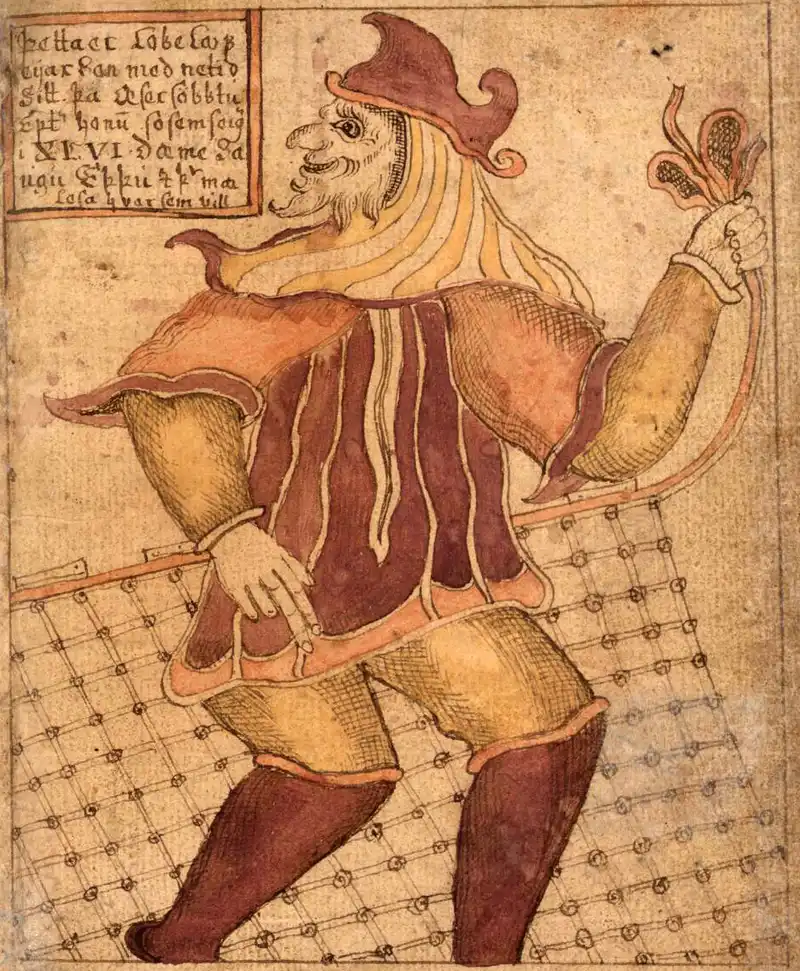
In an Akan tale printed by R. S. Rattray in 1930, Anansi buys the Sky-god’s stories. Beside Hermes, Loki and Coyote, five texts share one motif in eight.
Picture credit
"SÁM 66, 79r, Loki" by Jakob Sigurðsson — https://commons.wikimedia.org/wiki/File:S%C3%81M_66,_79r,_Loki.jpg — Public domain in US (manuscript of 1765–66); DE/FR (Jakob Sigurðsson, 18th-century draughtsman, life+70); faithful reproduction of a two-dimensional manuscript page (PD-Art), digitized for the Árni Magnússon Institute’s Sagnanet; cropped, rotated and levelled by the Commons uploader
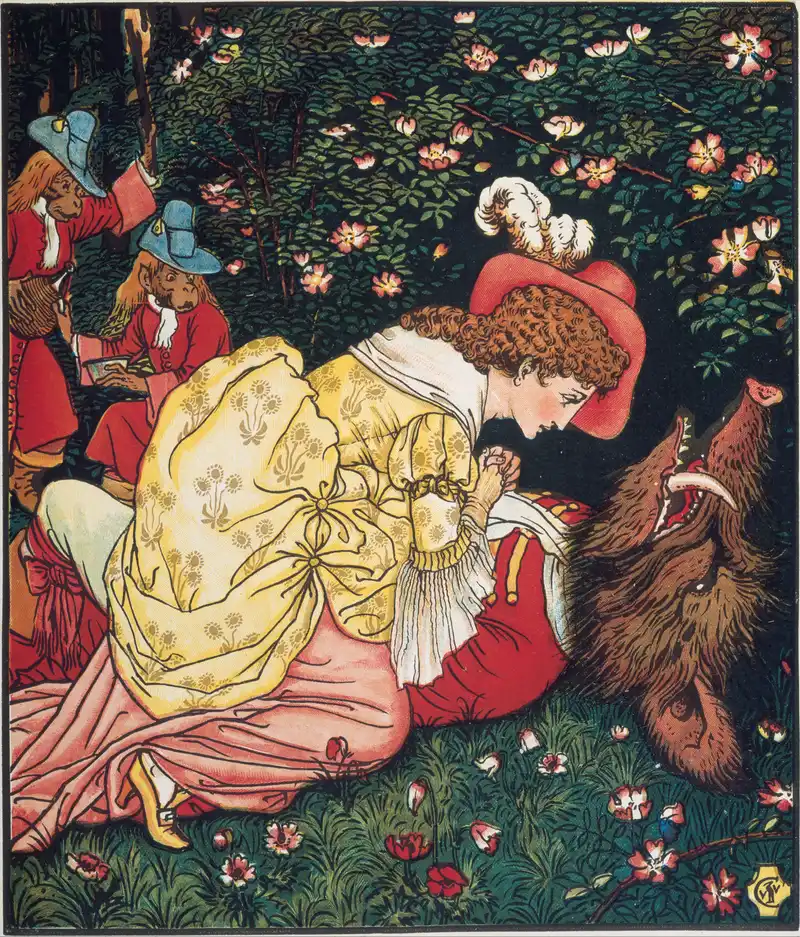
Villeneuve published Beauty and the Beast in 1740 and Beaumont in 1756. In the scans counted here, Beaumont’s French runs about 13% of Villeneuve’s.
Picture credit
"Beauty and the Beast, book; colour wood engraving, engraved and printed by Edmund Evans (about 1901 edition)" by Walter Crane — https://commons.wikimedia.org/wiki/File:Beauty_and_the_Beast_MET_DT11058.jpg — CC0 1.0 (https://creativecommons.org/publicdomain/zero/1.0/)
Find a tale, teller or edition
Looks through article titles, one-line summaries and the name of the section each article is filed in (18 articles). It does not search the full text of articles or the pages about the site.
The search box needs JavaScript. Every article is also listed in the four sections above.
May this site count your visit?
May Google Analytics set cookies to count your visit? Cloudflare Web Analytics sets no cookies and counts visits either way; this choice does not change it. No ads run here. Privacy for readers