One Tale, Many Tellers
Type ATU 533, as classified by D. L. Ashliman
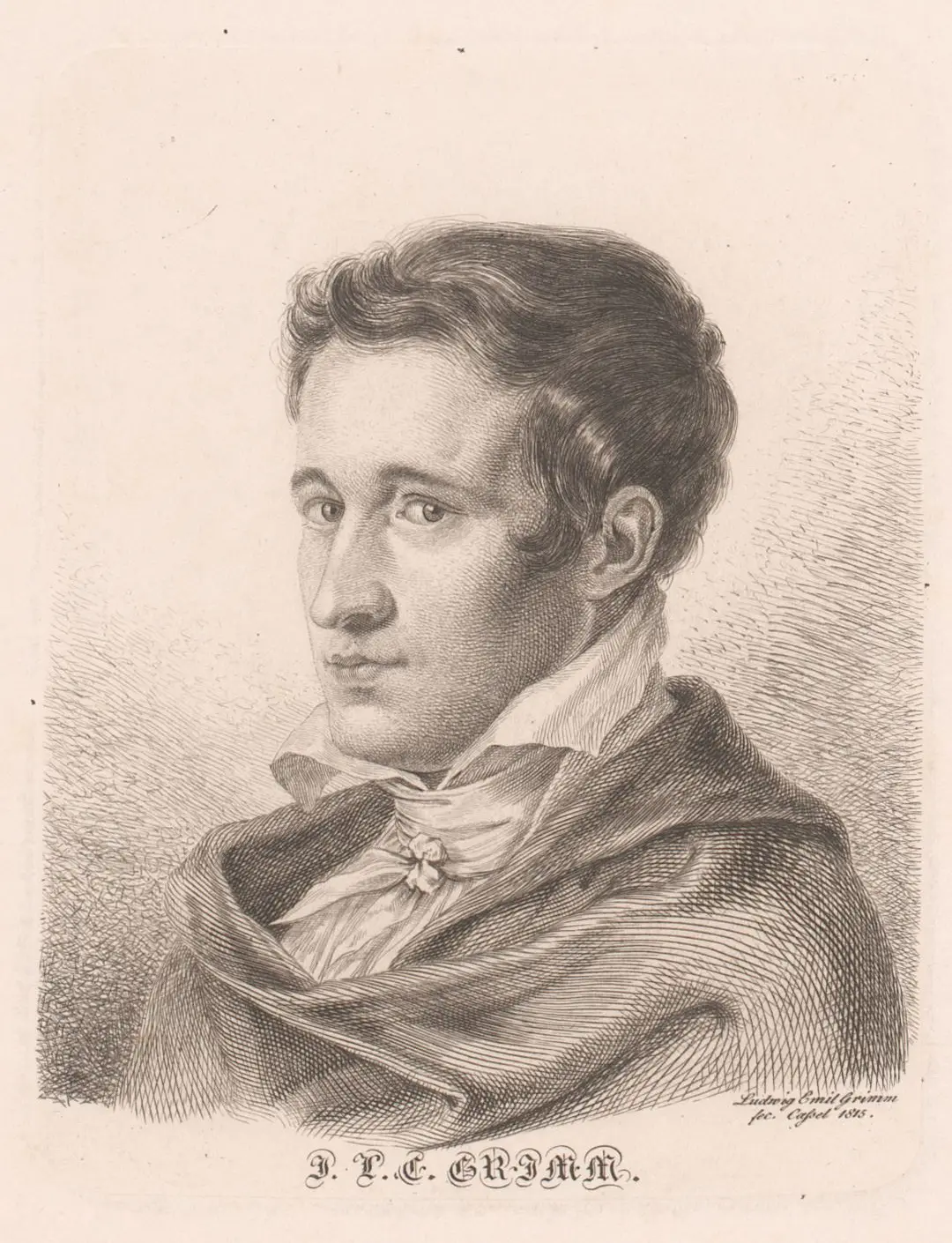
The Grimms’ 1815 preface calls Dorothea Viehmann a peasant woman. Her biography records an innkeeper’s daughter who married a tailor. Both prefaces, compared.
Picture credit
"Portret van Jacob Ludwig Karl Grimm" by Ludwig Emil Grimm — https://commons.wikimedia.org/wiki/File:Portret_van_Jacob_Ludwig_Karl_Grimm,_RP-P-1907-1042.jpg — CC0 1.0 (https://creativecommons.org/publicdomain/zero/1.0/); modified: cropped to the plate (sheet margins removed)
One Tale, Many Tellers
Type collection of folktales (no single ATU number)
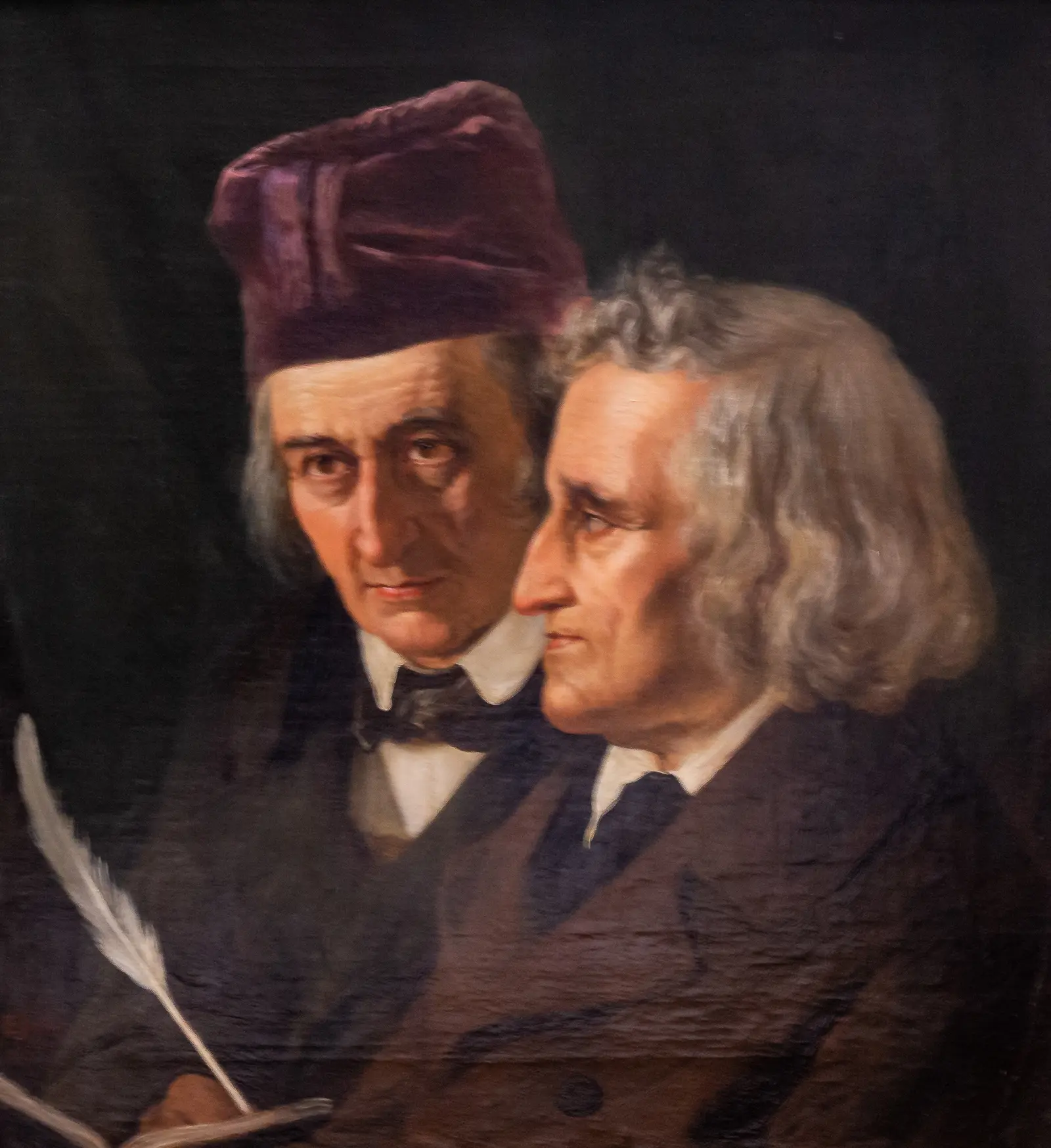
Bolte and Polívka’s 1913 notes on Grimm tales 1–60 name 21 tellers, 13 of them women, and 34 of 62 credits name Kassel. The register lists them entry by entry.
Picture credit
"Doppelportrait der Brüder Jacob und Wilhelm Grimm" by Elisabeth Jerichau-Baumann — https://commons.wikimedia.org/wiki/File:Alte_Nationalgalerie-Jerichau-Baumann-Gebr%C3%BCder_Grimm_DSC8174.jpg — CC0 1.0 (https://creativecommons.org/publicdomain/zero/1.0/); modified: cropped to the painted canvas; gilt frame and wall removed
One Tale, Many Tellers
Type ATU 410, as classified by D. L. Ashliman
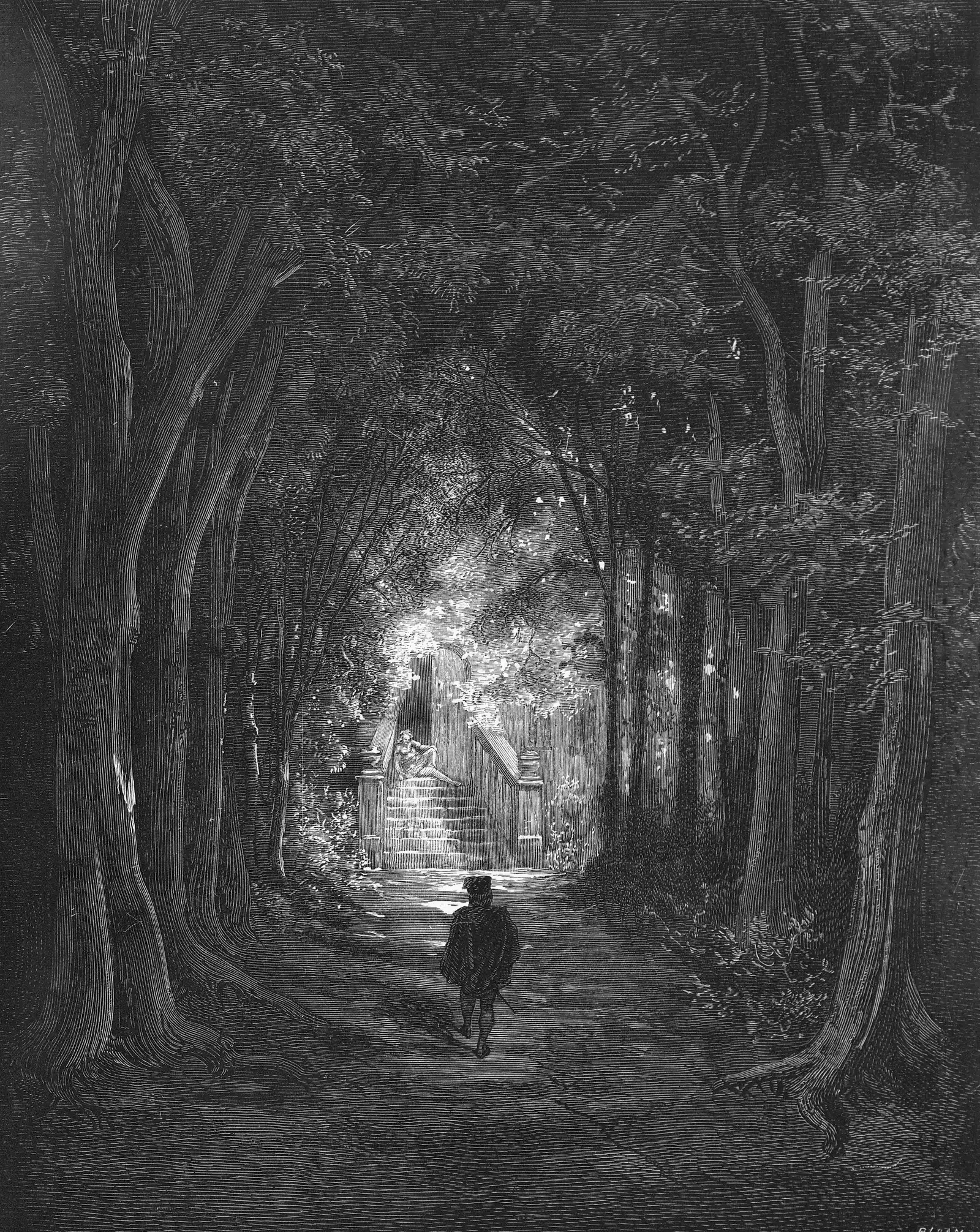
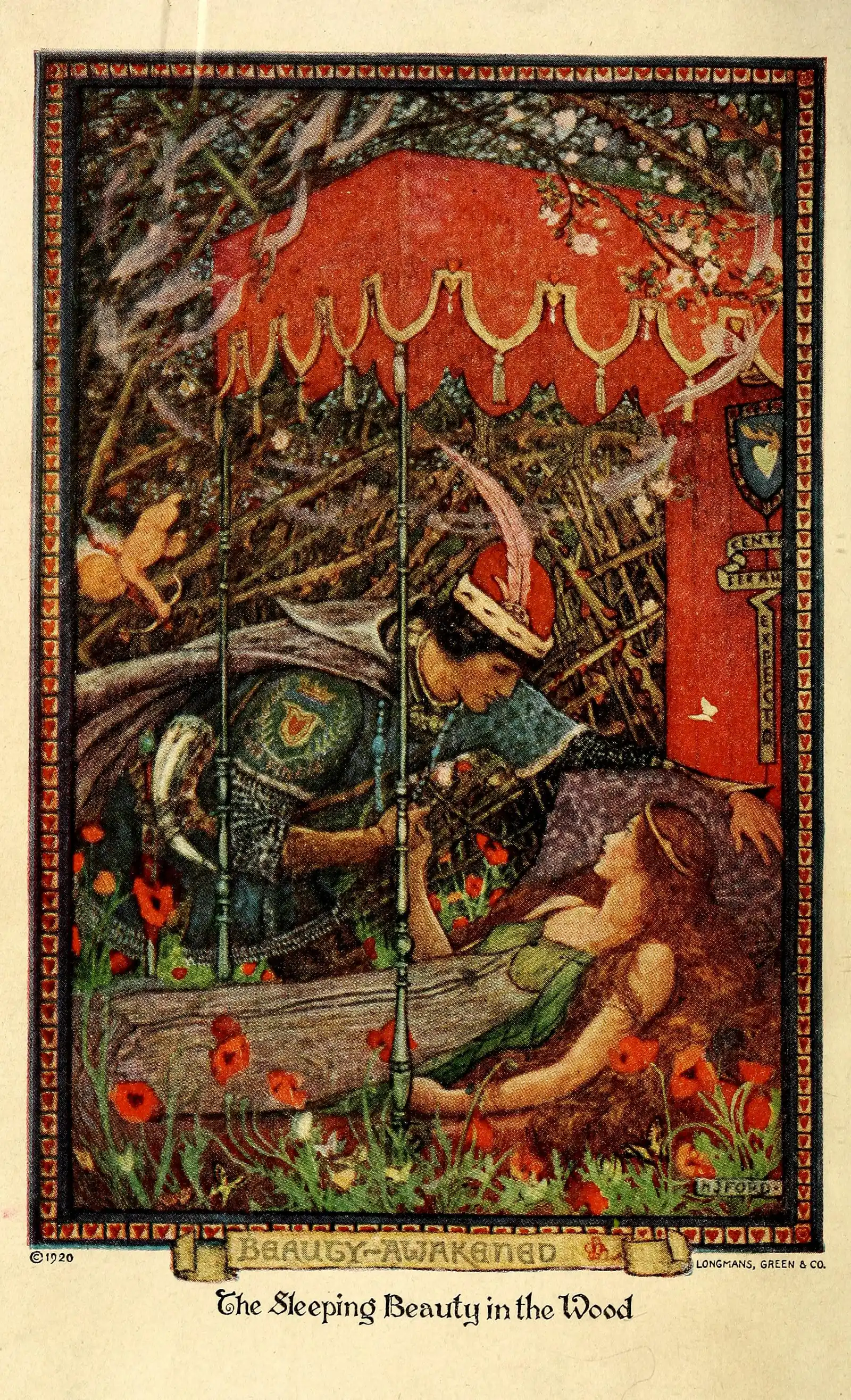
Sleeping Beauty in Basile (printed 1636): twins draw out a splinter. Perrault (1697): the spell ends. Of 4 texts compared here, only 2 Grimm texts use a kiss.
Picture credit
"La Belle au Bois Dormant" by Gustave Doré — https://commons.wikimedia.org/wiki/File:La_Belle_au_Bois_Dormant_(136548149).jpg — Public domain in US (published 1867); DE/FR (Gustave Doré d. 1883, life+70); the wood engraver’s signature at lower right is not legible, and an engraver working on an 1867 edition is presumed not to have lived past 1955 (log, image ruling 10)
One Tale, Many Tellers
Type tale printed in Galland’s Thousand and One Nights (no ATU number cited)
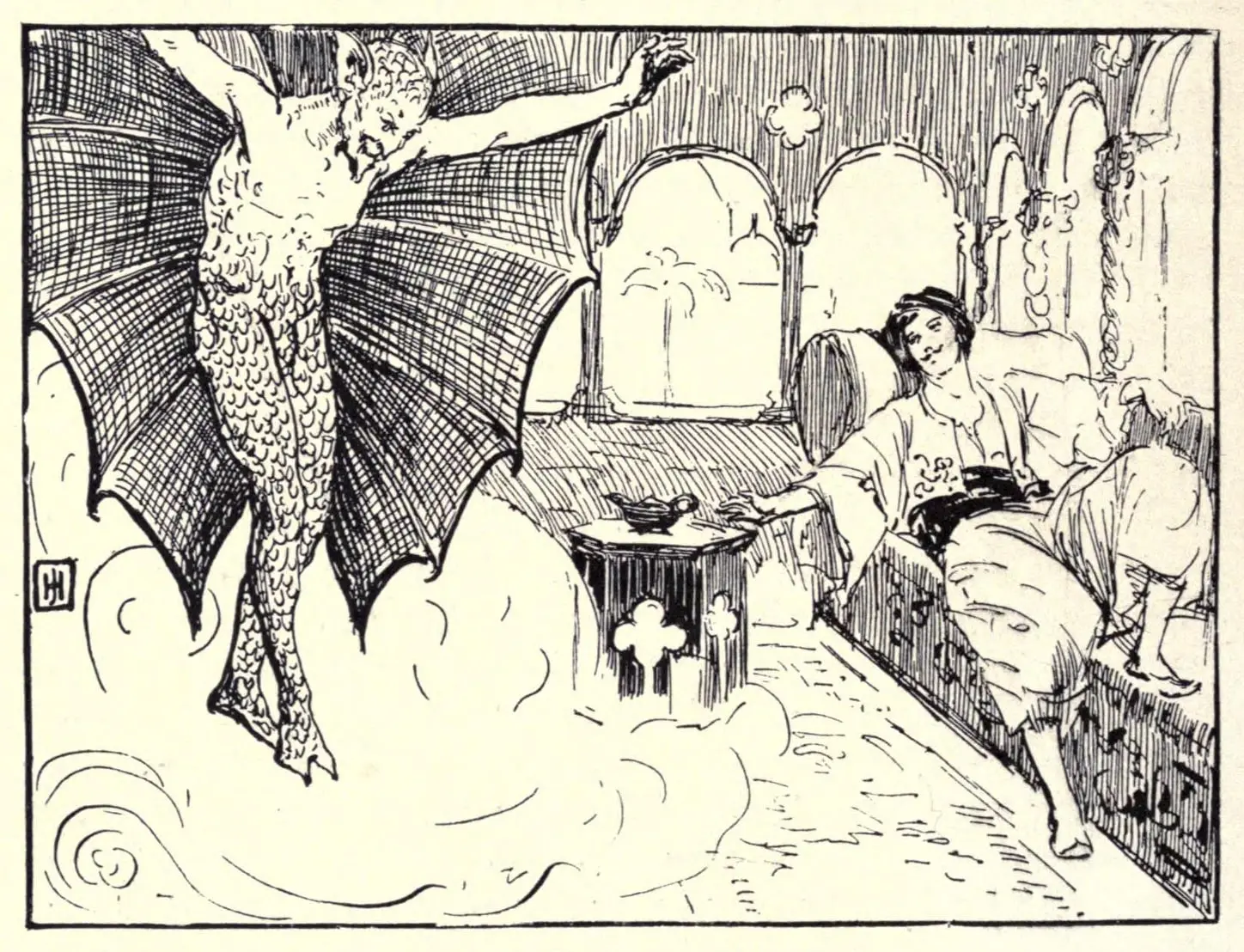
In the sources checked here, Aladdin’s earliest known record is Galland’s diary for 5 May 1709: Hanna, a Maronite from Aleppo, had just told him the tale.
Picture credit
"The Blue Fairy Book (1889), p. 78: plate to “Aladdin and the Wonderful Lamp”" by H. J. Ford — https://commons.wikimedia.org/wiki/File:The_Blue_Fairy_Book-0112.jpg — Public domain in US (published London and New York 1889); DE/FR (Henry Justice Ford d. 1941, life+70, public domain from 1 January 2012); modified: Cropped to the plate and its ruled frame with a strip of paper around it; the page text above and below is left out
One Tale, Many Tellers
Type anthology series of retold tales (no ATU number)
Andrew Lang wrote in 1910 that his fairy books were “almost wholly the work of Mrs. Lang.” His 12 prefaces name her in 11, not in the Blue Fairy Book of 1889.
Picture credit
"Beauty Awakened (The Sleeping Beauty in the Wood), colour plate, The Blue Fairy Book, 1920 edition" by H. J. Ford — https://commons.wikimedia.org/wiki/File:Beauty_Awakened_(The_Sleeping_Beauty_in_the_Wood)_(HJ_Ford).jpg — Public domain in US (published New York 1920); DE/FR (Henry Justice Ford d. 1941, life+70, public domain from 1 January 2012)
One Tale, Many Tellers
Type ATU 425C, as classified by D. L. Ashliman
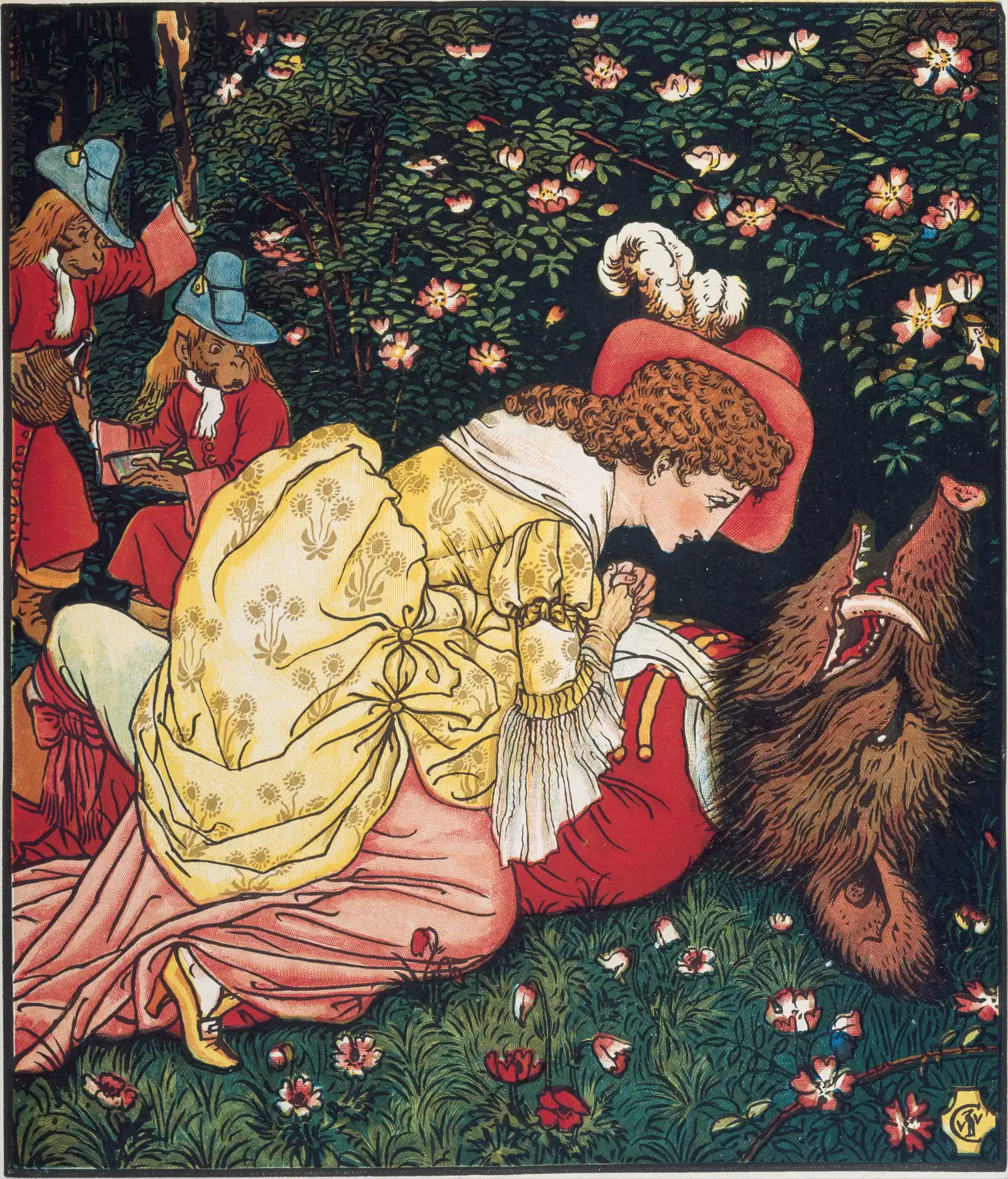
Villeneuve published Beauty and the Beast in 1740 and Beaumont in 1756. In the scans counted here, Beaumont’s French runs about 13% of Villeneuve’s.
Picture credit
"Beauty and the Beast, book; colour wood engraving, engraved and printed by Edmund Evans (about 1901 edition)" by Walter Crane — https://commons.wikimedia.org/wiki/File:Beauty_and_the_Beast_MET_DT11058.jpg — CC0 1.0 (https://creativecommons.org/publicdomain/zero/1.0/)